> For the complete documentation index, see [llms.txt](https://help.lumintheme.com/lumin-theme-documentation/llms.txt). Markdown versions of documentation pages are available by appending `.md` to page URLs; this page is available as [Markdown](https://help.lumintheme.com/lumin-theme-documentation/product-page/products-siblings/how-to-setup-siblings.md).
# How to setup siblings
Steps to configure Siblings
These are the five main components of setting up product siblings:
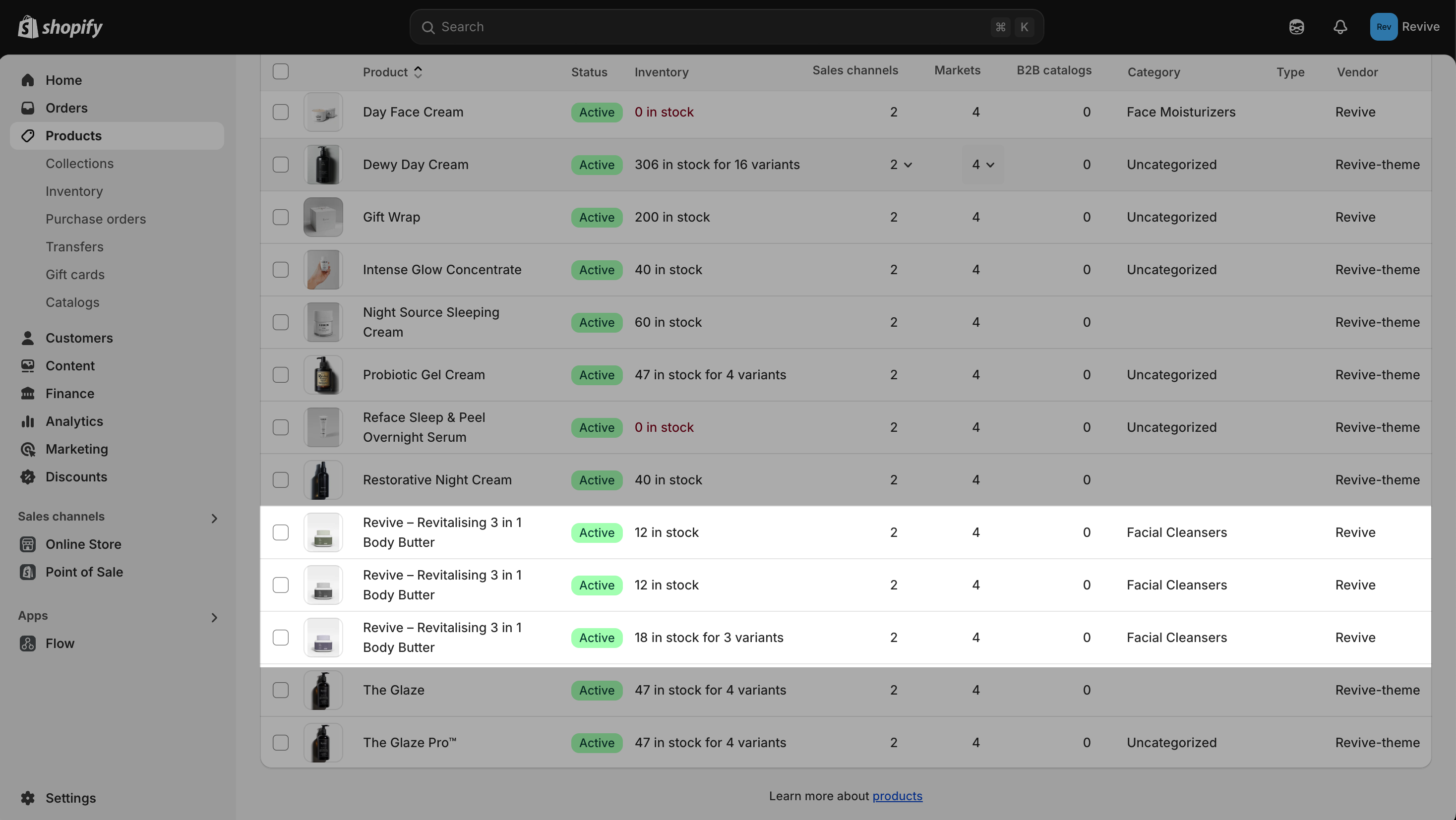
1. Create individual products which will later be connected together as one. Each product can have variants like sizes, color etc.
2. Group the Sibling products together into a custom collection (hidden from other collections).
3. The last step is to add the siblings block in the Theme Editor and configure the settings.
### Step 1 - Individual products
Create individual products that are similar. You can use the same name for the product title when creating each product. You can add option name and variant name in 'Product Siblings Picker' in product page to differentiate each product:
{% hint style="info" %}
Tip: If you have SEO concerns, you can simply change the SEO name for each product or use different names as well
{% endhint %}
When building Siblings, you'll replace one product with multiple color variants into multiple products that are later linked together as one. For example, if a t-shirt has five colors, you'll build five individual products, each can have variants.
Each of these products ideally should have the same name, make one product, and then copy that product multiple times.
{% hint style="success" %}
In this example, we will combine all these products into one product using the Siblings feature. Therefore, each product is a duplicate of the other with the exception of the product images. Each product represents one color for the combined product.
{% endhint %}
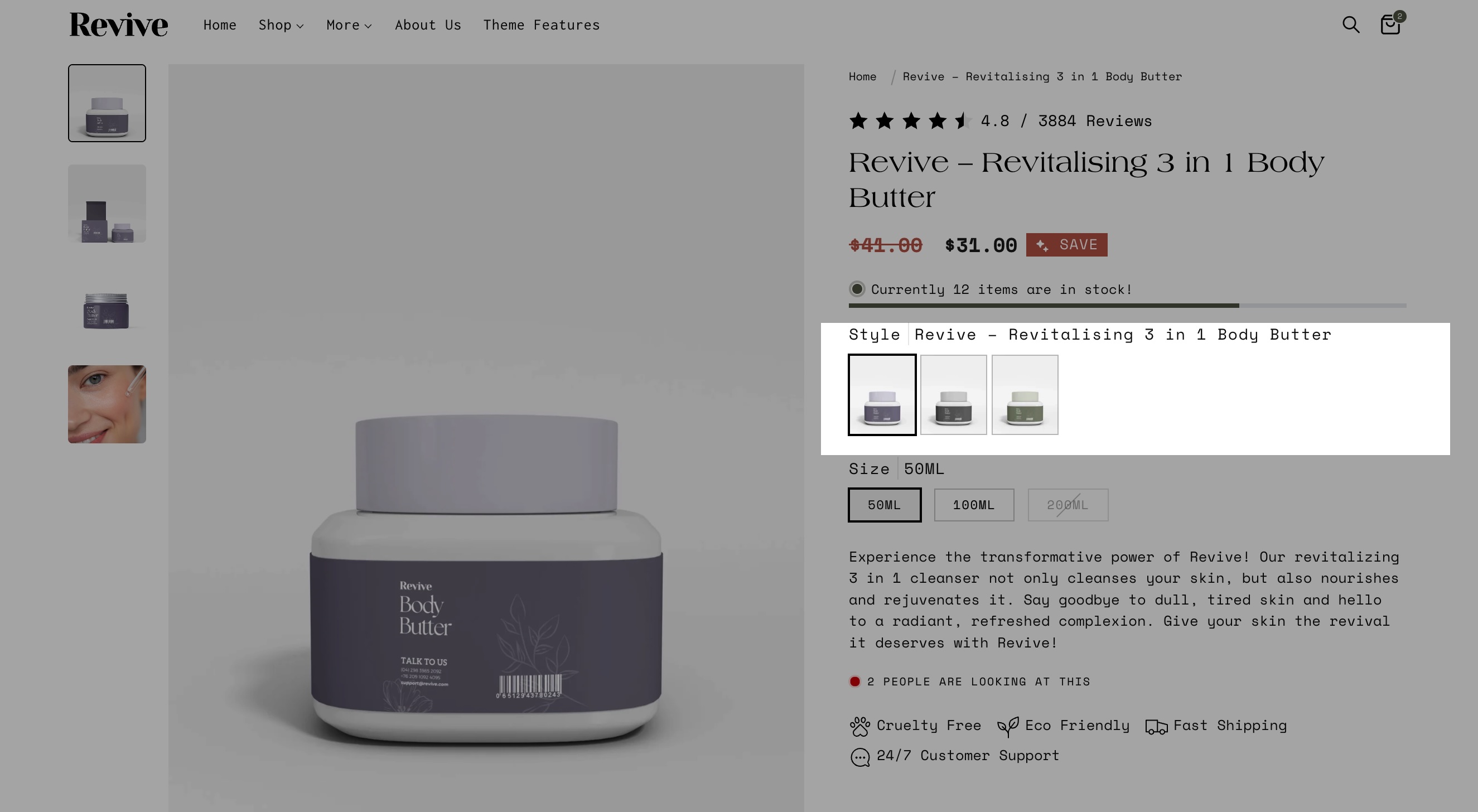
Once connected to each other as siblings, they will appear with linked swatches to each other:
Each product can have its own images, inventory, prices, description, and variants like Size, Color etc.
{% hint style="success" %}
Tip: Create the first product with sizes, color and prices, then duplicate that product and add new images for each variation and adjust the description, inventory, and prices. Only the product name needs to be the same for all products.
{% endhint %}